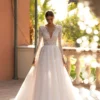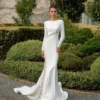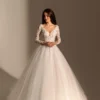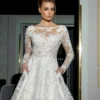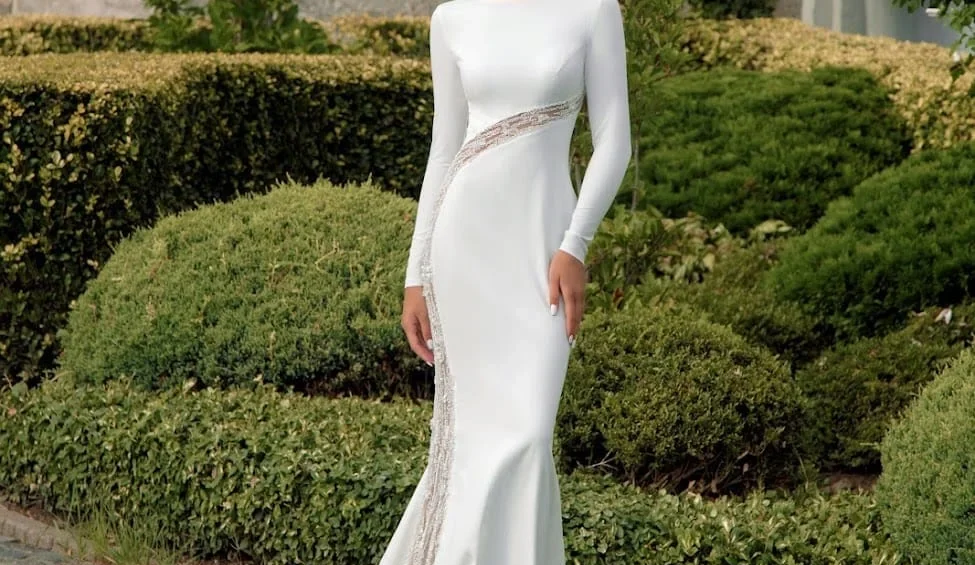
Your wedding dress doesn’t exist in isolation—it’s the centerpiece of your wedding’s visual aesthetic, influencing everything from bridesmaid dresses to floral arrangements. Understanding how to coordinate your bridal party’s look with your gown creates cohesive, photographically stunning results that elevate your entire celebration.
Starting with Your Dress
Your wedding dress should be the first major aesthetic decision in your planning process. This foundational choice influences bridesmaid dress selections, groomsmen attire, and even your color palette. While it might seem logical to choose bridesmaid dresses first to ensure you coordinate, the reverse approach creates better results.
Your dress represents you—the star of the celebration. Everything else should complement and enhance your dress rather than the other way around. Once you’ve found your perfect gown, you can select bridesmaid dresses that harmonize beautifully with it.
At Nurj Bridal, we encourage brides to bring fabric swatches or photos of their dress when shopping for bridesmaid dresses. This visual reference ensures color coordination and helps you select bridesmaid styles that complement your gown’s formality and aesthetic.
Formality Alignment
Your dress’s formality level should guide bridesmaid dress formality. If you’re wearing a dramatic ballgown with cathedral train and elaborate beading, your bridesmaids should wear equally formal gowns—floor-length styles in luxurious fabrics. Mismatching formality levels creates visual discord in photographs.
Conversely, if you’ve chosen a sleek, modern sheath dress or bohemian lace gown, your bridesmaids can wear less formal, more relaxed styles. Tea-length dresses, flowing bohemian styles, or minimalist slip dresses might complement your look beautifully.
This doesn’t mean your bridesmaids’ dresses must be as ornate as yours—you should still be the most elaborately dressed person at your wedding. Rather, their dresses should reflect the same level of formality and style approach as your gown.
Color Coordination Strategies
Your dress color influences bridesmaid color choices significantly. Classic white or ivory wedding dresses offer maximum flexibility—bridesmaids can wear virtually any color. However, if you’ve chosen a non-traditional dress color, coordination requires more thought.
If wearing a blush, champagne, or colored wedding dress, select bridesmaid colors that harmonize without competing. Complementary colors create beautiful visual balance. For example, a champagne Wedding Dress Dubai looks stunning with bridesmaids in deep jewel tones or soft pastels, while a bold colored dress might pair beautifully with neutral bridesmaid attire.
Consider your dress’s undertones when selecting bridesmaid colors. An ivory dress with warm undertones pairs differently with bridesmaid colors than a stark white dress with cool undertones. Bring dress fabric swatches when selecting bridesmaid dresses to ensure color harmony.
Matching Aesthetic Approaches
Your dress’s overall aesthetic should guide bridesmaid dress style. A romantic, lace-heavy wedding dress pairs beautifully with bridesmaids in flowing, feminine dresses—perhaps featuring softer fabrics like chiffon or tulle. A sleek, modern wedding dress suggests clean-lined, contemporary bridesmaid dresses.
This doesn’t require identical styling, but rather cohesive aesthetic language. If your dress features vintage-inspired lace details, bridesmaid dresses with subtle vintage elements—perhaps art deco beading or 1920s-inspired silhouettes—create visual harmony. If your dress is minimalist and architectural, geometric bridesmaid dresses or structured silhouettes complement beautifully.
The Mix-and-Match Trend
Many modern brides choose mix-and-match bridesmaid dresses rather than identical styles for everyone. This approach works beautifully when coordinated thoughtfully with your wedding dress. Select parameters that create cohesion—perhaps the same color in different styles, different shades of the same color family, or various styles within a specific aesthetic.
When your bridesmaids wear different dresses, your wedding gown’s unifying presence becomes even more important. You’re the visual anchor that ties everything together. Your dress provides the cohesive element that makes the mismatched bridesmaid dresses feel intentional rather than chaotic.
Texture and Fabric Considerations
Your dress’s fabric influences what bridesmaid dress fabrics complement it best. Heavy silk wedding dresses pair beautifully with bridesmaids in luxurious fabrics like silk charmeuse, satin, or velvet. Lightweight, flowing wedding dresses suggest chiffon, tulle, or lightweight silk for bridesmaids.
Mixing fabric weights can create visual imbalance. If you’re wearing a substantial, structured gown, bridesmaids in flimsy, lightweight dresses might appear underwhelming in photos. Similarly, if you’ve chosen an ethereal, lightweight dress, bridesmaids in heavy fabrics might appear overly formal in comparison.
Embellishment Balance
Your dress’s embellishment level guides how ornate bridesmaid dresses should be. Heavily beaded or embroidered wedding dresses typically look best with simpler bridesmaid dresses—solid colors without excessive embellishment. This ensures you remain the focal point without visual competition.
Conversely, if your dress is relatively simple and unembellished, bridesmaids can wear more detailed dresses without overwhelming your look. Subtle beading, embroidered details, or textured fabrics add interest to bridesmaid dresses without competing with a minimalist bridal gown.
Cultural Considerations in Dubai
Dubai’s multicultural weddings often involve multiple outfit changes and different cultural traditions within one celebration. When coordinating with bridesmaids across these different segments, consider how your various outfits influence their looks.
If wearing a white European gown for your ceremony and changing into a traditional colored dress for your reception, you might coordinate different bridesmaid looks for each segment. This allows you to maintain cohesive aesthetics throughout while honoring various cultural traditions.
Photography Considerations
Remember that wedding photographs are your primary record of how everyone looked. Consider how your dress and bridesmaid dresses will photograph together. High contrast creates clear visual separation between you and your bridal party—you in white or ivory, them in colored dresses. Lower contrast creates softer, more romantic imagery.
Discuss photography considerations with your photographer. They can offer guidance on colors that photograph well together and how different fabric combinations work in various lighting conditions.
The Groom and Groomsmen
While groomsmen coordination is less directly tied to your dress than bridesmaid coordination, your gown still influences their look. Your dress’s formality indicates appropriate groomsmen attire formality. A ballgown wedding suggests tuxedos, while a casual beach wedding dress might pair with lighter suits or even dress shirts without jackets.
Your dress colors can also inspire groomsmen details. Tie colors, pocket squares, or boutonniere wrapping might echo your bridesmaid dress colors, creating visual cohesion across your entire bridal party.
Working with Nurj Bridal
At Nurj Bridal, we understand that your dress is the cornerstone of your wedding’s aesthetic. We’re happy to discuss how your dress choice will influence other wedding elements and can provide guidance on coordinating your bridal party. We can connect you with excellent bridesmaid dress sources in Dubai that will complement your Nurj Bridal gown beautifully.
Your wedding dress is the star of your celebration, but it exists within a broader visual context. Thoughtful coordination between your gown and your bridal party creates harmonious, stunning results that you’ll treasure in photographs for decades to come.